
Published: 7 November 2026 · Original study · Alcorcón, Móstoles, Pozuelo, Boadilla and Majadahonda
Of 1,035 dental clinics, beauty centres and hairdressers in five towns in west and southwest Madrid, 522 (50%) show no website in the public sources I checked; 722 (70%) list a phone number and 315 (30%) list an email address. In other words: 1 in 2 local businesses in these towns is hard to find online beyond their Google profile, and 3 in 10 cannot be contacted by email. This post covers the aggregated data, the method and what it means. It contains no business names, phone numbers or addresses.
One thing to be clear about from the start: this study measures businesses with no website listed or visible in public profiles (Google Maps, OpenStreetMap, Bing and DuckDuckGo). It does not measure businesses that have no website at all.
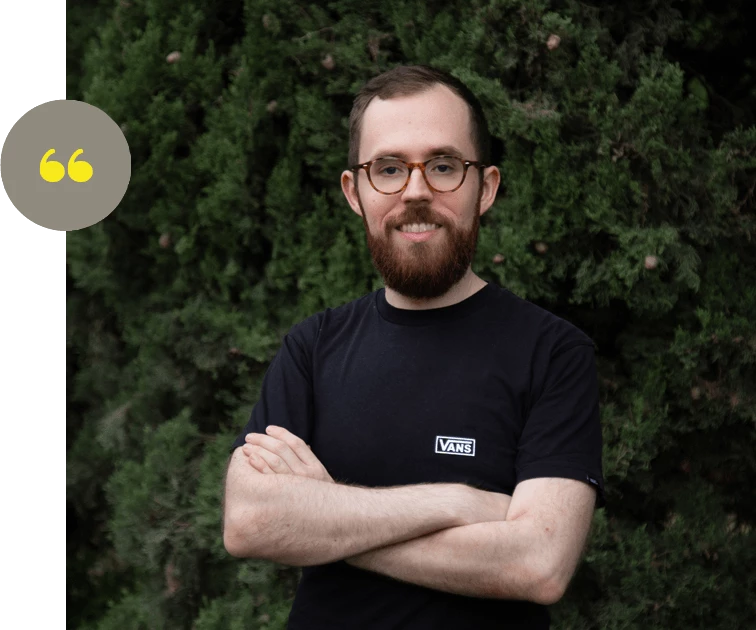
For context: I'm Adrián Rubio, I live and work in Alcorcón, and I sell web design and digital marketing (in Spanish) to local businesses. This data comes from a tool I use to find people I could help, so I have an interest in the result. That's why I explain how each figure was counted and where the method falls short.
How the study was done
- Public sources: Google Maps profiles (590 records), OpenStreetMap (531), Bing (19) and DuckDuckGo (26). The same business can appear in several sources.
- Towns and sectors: Alcorcón, Móstoles, Pozuelo de Alarcón, Boadilla del Monte and Majadahonda; dental clinics, beauty centres and hairdressers.
- Deduplication: a business counts once even if it appears in several sources. Result: 1,035 businesses.
- What counts as "with a website": at least one of the sources checked links the business to a web address.
- What counts as "with a phone number" or "with an email": the detail appears in at least one of the sources checked.
- Date: batch of 28 October 2026.
One curious detail from the method itself: 487 of the 1,035 businesses did not appear on Google Maps and came from other sources. If I had only looked at Maps, the study would have left out almost half.
Results by town
| Town | Businesses | With website | With phone | With email |
|---|---|---|---|---|
| Alcorcón | 197 | 53% | 64% | 28% |
| Boadilla del Monte | 131 | 63% | 79% | 39% |
| Majadahonda | 200 | 64% | 79% | 37% |
| Móstoles | 271 | 41% | 78% | 29% |
| Pozuelo de Alarcón | 236 | 40% | 51% | 24% |
| Total | 1,035 | 50% | 70% | 30% |
The towns with the most businesses showing no website are Pozuelo (60% with no website listed) and Móstoles (59%). In Pozuelo, only half also list a phone number. Boadilla and Majadahonda do better: around 6 in 10 have a website listed and almost 8 in 10 list a phone number.
Results by sector
| Sector | Businesses | With website | With phone | With email |
|---|---|---|---|---|
| Dental clinics | 436 | 45% | 65% | 34% |
| Beauty centres | 211 | 82% | 97% | 47% |
| Hairdressers | 388 | 39% | 60% | 17% |
Hairdressers have the weakest presence: 6 in 10 show no website and only 1 in 6 lists an email. Beauty centres are at the other extreme: 8 in 10 have a website listed and almost all list a phone number. Dental clinics sit in the middle, but with a big difference between towns: in Móstoles, only 46 of 140 clinics (33%) show a website.
What this study doesn't say
- It doesn't measure whether a website works. A business having a website doesn't mean it loads, looks good on a phone or lets people call with one tap. I measured that in another study, the 2026 digital X-ray of Alcorcón (in Spanish), where 1 in 5 registered websites didn't work.
- "No website" means "not found in these sources". A business may have a website that doesn't appear in its Google profile or in OpenStreetMap. So the real number of businesses with no website at all could be somewhat lower.
- These aren't all businesses. Only three sectors and five towns. It can't be extrapolated to the whole Community of Madrid.
- It doesn't distinguish size or age. A sole trader and a clinic with five treatment rooms count the same.
What it means if you run a local business
The practical conclusion isn't "get a website now". It's that being found and being callable matters more than having a pretty site. In this order:
- An up-to-date Google profile. Phone number, opening hours, category, photos and reviews. It's the first thing people see when searching from a phone, and it's free. If yours isn't in order, start there: how to get more customers with Google Maps (in Spanish).
- A phone number people can tap. If you publish the number as an image, or as text without a link, mobile customers have to copy it by hand.
- A minimal website that answers what people search for: what you do, where, what it costs or from how much, and how to get in touch. To plan one: web design for small businesses: what to ask for and what it costs (in Spanish), and the general breakdown in how much a website costs in Spain in 2026. My starting prices for local businesses are on the prices page (in Spanish).
If your business is a clinic, physiotherapy, psychology or wellness practice, my brand Physis Digital works only in that sector: website, Google profile and visibility in AI-powered search engines.
If you want to see where yours stands today, the free tool Check your website tests whether it works, whether it looks right on a phone, whether it loads fast and whether people can call from it.
What it means if you sell services to these businesses
If your client is a neighbourhood business, these numbers say the most reliable channel is the phone: 7 in 10 list one and only 3 in 10 list an email. And even with an email, Spanish law (the LSSI, Spain's e-commerce law) requires consent or a prior relationship before you send commercial emails; I explain it in what mailing is and when it works for a local business.
Frequently asked questions about this study
Do I need a website if I already have a Google profile?
A Google profile makes you visible on the map, but it doesn't explain what you do or what sets you apart. A simple website answers questions before the customer calls and lets you show up in searches the profile doesn't cover. If you have to pick an order, profile first, then website.
How much does the bare minimum to be online cost?
A Google profile is free. A simple local website starts from €800 in my case; there are cheaper alternatives using templates, with less control. The full range and what each option includes is on the prices page (in Spanish).
Which town is worst off?
In this study, Pozuelo de Alarcón (40% with a website, 51% with a phone number) and Móstoles (41% with a website). But the sample covers three sectors, so this isn't a general ranking of towns.
How was the study done?
Using public profiles from Google Maps, OpenStreetMap, Bing and DuckDuckGo for three sectors in five towns, deduplicated, and counting only details that appear published. The detail is in the "How the study was done" section.
Can I ask for the data for my sector or town?
I can share the aggregates for your sector and town if they're among those covered. I don't share data on individual businesses. Get in touch with your sector and town.
In summary
Half of the 1,035 businesses reviewed show no website in public profiles, 7 in 10 list a phone number and 3 in 10 an email. Hairdressers, Pozuelo and Móstoles are the weakest points. What's useful for a business owner isn't getting a website as soon as possible, but making sure people can find you and call you. If you want to compare your town, see the hubs for Alcorcón, Móstoles, Pozuelo, Boadilla del Monte and Majadahonda (all in Spanish).