Updated: 4 August 2026 · Digital Marketing, Pharmacies
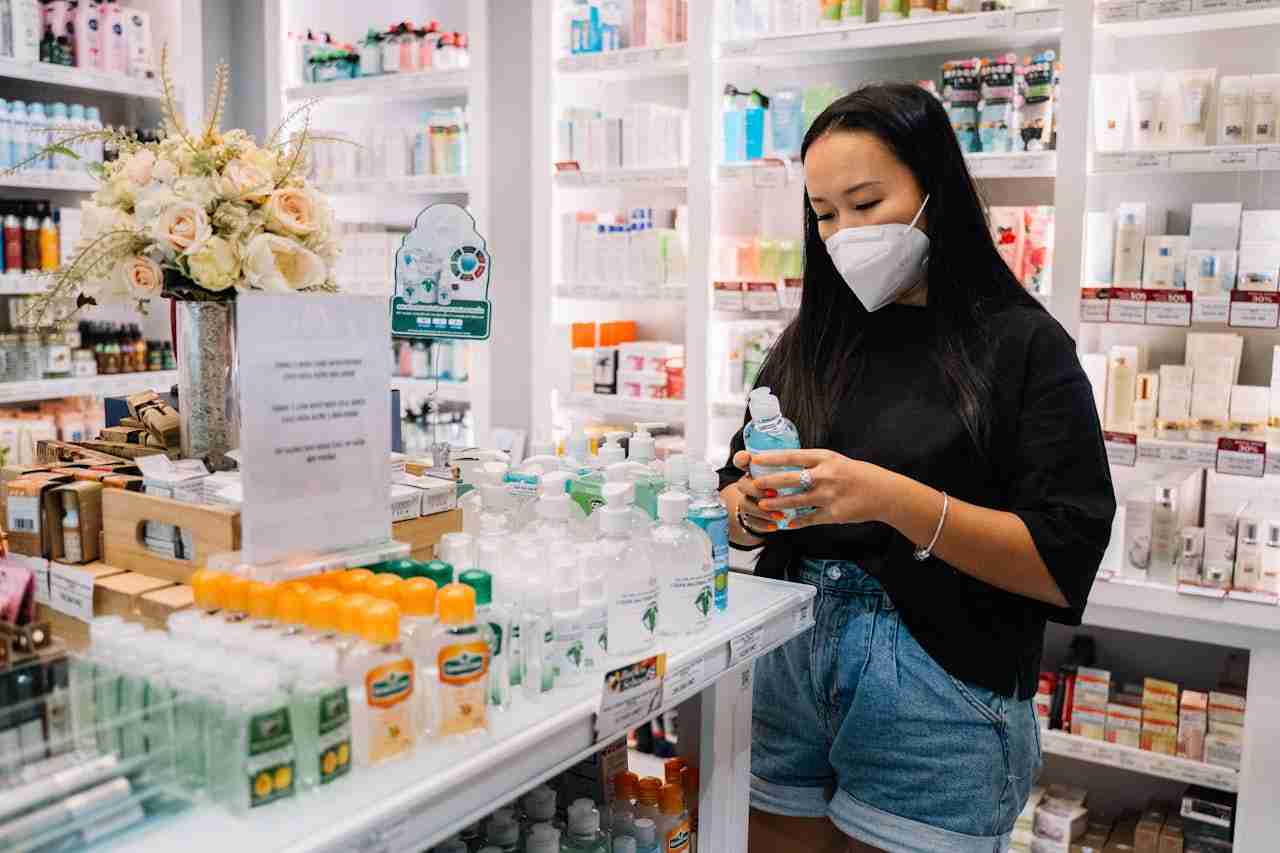
A pharmacy has a marketing problem almost no other local business has: most of your customers walk in because they happened to be passing, not because they chose you. That makes it easy to conclude digital marketing won't move the needle.
It does, but not for what people expect. It won't make someone cross town for ibuprofen. What it does is make local people choose you for everything else — dermocosmetics, orthopaedics, nutrition, testing, advice. Which is where the margin lives.
The margin sits outside prescription medicine
Prescription medicine has a fixed price and a regulated margin. It brings footfall, not profitability.
Where a pharmacy actually decides its profitability is in over-the-counter ranges and services: dermocosmetics, nutrition, infant care, orthopaedics, dietary products, measurement and monitoring services. And there the customer does choose, does compare, and does want advice.
Every bit of a pharmacy's digital marketing should point at that.
Google Business Profile: first, and most profitable
When someone searches "pharmacy open now" or "pharmacy near me", Google shows three profiles with a map. Your website barely features there — the profile decides it.
What needs to be right:
- Exact opening hours, including holidays and out-of-hours rotas. It's the most-checked and most-neglected field. A pharmacy showing "closed" while actually open loses that customer instantly.
- The correct primary category, plus applicable secondary ones.
- Real photos of the interior, the window and the sections. They help people recognise the door when they arrive.
- Services listed individually: orthopaedics, nutrition, testing, dermocosmetics. Each one is a possible search.
The general approach is in getting more clients with Google Maps.
Reviews, with one important caution
Reviews carry a lot of weight in the local pack. But in pharmacy they need more care than in other sectors: never ask during a health consultation or in connection with a specific treatment. The right moment is an over-the-counter purchase or a non-clinical service.
And always reply without discussing anyone's health details, even when the customer put them in their own review.
Content: answer what people won't ask at the counter
This is where a pharmacy has an enormous advantage over any other retailer: you're a trusted health source, and there are a great many searches from people who don't want to ask across a counter with others listening.
What works:
- Real differences between similar-looking products
- What to check on a label
- How to correctly use something most people use wrong
- What to expect from a treatment, and over what timeframe
With one non-negotiable rule: inform, never diagnose or promise results. Beyond being the right thing to do, ad platforms restrict health claims hard, and a promise of results is the fast route to a suspended account.
Advertising: yes, but tightly bounded
Pharmacy advertising has real limits. You can't advertise prescription medicines, and many health categories are restricted on Google and Meta.
What does work:
- Very tight geographic targeting, a few kilometres. You're not competing with another city, you're competing with the pharmacy on the next corner.
- Specific product ranges, not "the pharmacy" in general.
- Services: orthopaedics, testing, nutrition. These are what justify someone travelling to you.
- Seasonal campaigns: sun care in spring, cold and flu in autumn, allergies.
You can start with small budgets, as in Google Ads on a €50 budget.
Social media: for retention, not acquisition
A pharmacy rarely wins new customers through Instagram. What it does do is keep existing ones engaged and raise average basket size through recommendations.
What works: genuinely explained new products, seasonal advice, introducing the team. What doesn't: generic health posts copied from elsewhere.
Building a specialisation people search for by name
Once the basics are in place, the pharmacies that stand out from three others on the same street usually did one specific thing: they became known for a particular category, not just "pharmacy." Paediatric skin care, sports nutrition, a strong orthopaedic range — pick whichever genuinely matches your customer base and your team's actual expertise, then make sure it's the first thing a visitor sees on the Google profile and the website. That specialisation is what turns "any pharmacy nearby" into "the pharmacy that knows about this," which is a search someone will make by name rather than by proximity alone.
Frequently asked questions
Can I sell online? Online sale of non-prescription medicines is regulated and requires explicit authorisation; prescription medicines cannot be sold online. Over-the-counter ranges are a different matter with more room to manoeuvre. Confirm with your professional body before building anything.
Is a website worth it for a neighbourhood pharmacy? A simple one, yes: hours, services, location, contact. It reinforces the Google profile. What doesn't make sense is a large, expensive site when your catchment is four streets.
How much time per week does this need? One well-used hour keeps the profile current, replies to reviews and publishes something useful. Consistency matters more than volume.
What if there are three other pharmacies on my street? Then this matters more. When location doesn't differentiate you, service, specialisation and what people find when they search do. Specialising in something concrete — dermo, infant, orthopaedics — is what makes someone walk past another pharmacy to reach yours.
If you want to know where to start in your case, tell me your area and which services you offer. There are usually two or three free things that outperform hiring anyone. My full approach to local businesses is in consulting.